

So, you are planning to vacate your rented flat or house. Amid all the packing and last-minute packing madness, there is one thing that stands out – the end of tenancy clean. And let me tell you, it is not a thing to be taken lightly. Whether you’re a tenant looking to get your full deposit back or a landlord wanting to get the property tenant-ready, this clean is crucial.
A couple of years ago, I recall leaving a two-bedroom flat in East London. I believed that my weekly cleaning schedule would be enough. Spoiler alert: it didn’t. I lost £150 from my deposit for missed oven grime and a dusty skirting board. That mistake taught me the hard way – end of tenancy cleaning is a different beast altogether.
In this article, I’ll explain exactly what is involved in an end-of-tenancy clean, the difference between a standard and deep clean, what landlords expect of you, and give you a handy checklist to keep you on track.
Standard vs. Deep End of Tenancy Clean
You may be thinking, “I clean my place every week — is that not enough, then?” Well, not quite. There is a big difference between a regular clean and a deep, professional-level end-of-tenancy clean.

A standard clean is what the majority of us do weekly – hoovering, kitchen counter clean-up, a quick toilet clean, and taking out the bins. It’s superficial and useful in day-to-day living. But landlords and letting agents expect a lot more when it comes to moving out.
A deep-end of-tenancy clean, however, is like spring cleaning on steroids. It entails cleaning of every nook and cranny — places that you would never have thought about, such as limescale behind taps, greasy extractor fans, behind and underneath appliances, inside wardrobes, and even the tops of doors.
Checklist for End of Tenancy Cleaning
Generally, most tenancy agreements have a clause under which the property must be returned in the same condition it was let in, wear and tear excluded, of course. If it was professionally cleaned when you moved in, it has to be professionally cleaned when you move out.
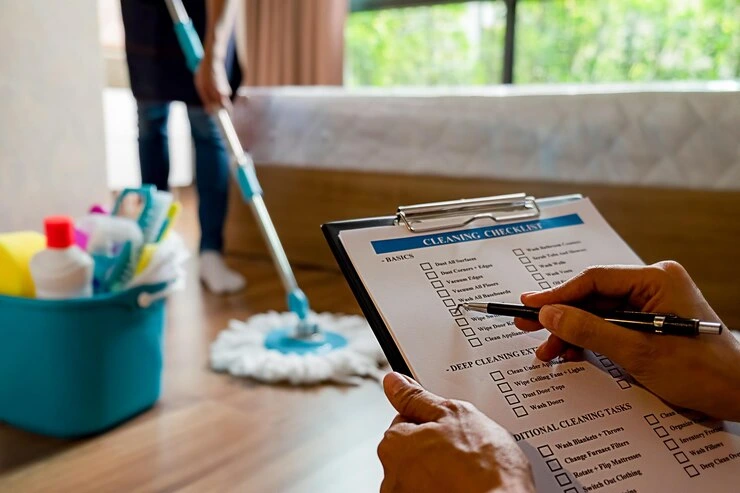
The difference that hiring a cleaning company can make is huge. They are supplied with commercial-grade tools and experience to do the job properly. And, truthfully, it relieves pressure from you during a stressful time.
I had once paid £180 for a full end of tenancy clean, and it was worth every penny when my full deposit was returned without a single complaint.
Here is a useful checklist to keep you on top of everything in your end-of-tenancy clean.
Whether you do it yourself or hire professionals, these areas must be covered:
Kitchen
- Clean inside and outside of all cupboards and drawers.
- Degrease hob, extractor fan, and backsplash.
- Clean inside the oven, including racks and trays.
- Thaw and clean the fridge and freezer.
- Wipe all surfaces, including countertops and tiles.
- Clean the sink and taps by removing limescale.
- Mop the floor
Bathrooms
- Clean the toilet, bath, sink, and shower properly.
- Clean limescale from taps and showerheads.
- Clean tiles and grouting
- Polish mirrors and glass surfaces
- Empty and sanitise bins
- Mop the floor
Bedrooms and Living Areas
- Dust and wipe all surfaces.
- Clean windows (inside only unless otherwise agreed)
- Clean inside wardrobes, drawers, and shelves.
- Hoover carpets and under furniture
- Remove any cobwebs
- Clean skirting boards, doors, and handles.
Throughout the Property
- Clean light switches and plug sockets
- Wipe radiators
- Hoover or mop floors
- Ensure all rubbish is removed.
This list can feel overwhelming, especially when you’re also dealing with packing and logistics. That’s why I always say — if you’ve got the budget, hire professionals. If not, tackle one room at a time and work your way through this checklist.
What Landlords Expect from End of Tenancy Cleaning
Let’s be honest – landlords can be choosy. And rightly so. They want their property back in prime condition, especially if you got it that way. The major thing to take here is to know what they expect, and even better, do not provide them with a reason to withhold your deposit.

Clean to Inventory Standards
Most landlords use an inventory report containing pictures taken before you moved in. They will use it in the final inspection. It needs to be as clean now as the property was spotless. That implies not just cleaning the surfaces, but also ensuring that appliances and skirting boards are clean and the corners of the ceilings.
No Lingering Odours or Stains
If you smoked or had pets (with permission, of course), your landlord will expect you to vacuum up all the smell and hair or dander. Professional carpet or upholstery cleaning might be required. I had a friend who lost £200 because of a pet hair that was under the sofa. It’s not just the visible – it’s the hidden as well.
Proof of Professional Cleaning
Some landlords or letting agents request a receipt from a cleaning company as evidence. If you are planning to do it yourself, ensure it is done thoroughly and document everything with photos.
Fix Damages and Change Light Bulbs
Cleaning also comes hand in hand with minor repairs. Change any blown bulbs, clear out plug sockets, and ensure everything is working fine. If something is broken, inform the landlord in advance.
Remember, landlords do not expect perfection, but they expect professionalism and respect for their property.
Conclusion
End of tenancy cleaning is not just a simple clear up before returning the keys, it is a deep, thorough cleaning process that helps return the property in the best possible condition. Whether you do it yourself or you hire the pros, knowing what’s included and what’s expected can make all the difference.
Whether it’s between a regular and deep clean, you are ticking through a detailed checklist, or you are meeting the expectations of your landlord, being proactive is not only going to save you stress; it is also going to protect your deposit.
To be more specific, I have learned that spending time or money on a thorough end-of-tenancy clean is worth it, both monetarily and in terms of peace of mind. Therefore, before you lock the door once more, take a step back, take a breath, and give your space the proper send-off cleaning it requires. It’s your final impression – make it count.


0 Comments