

Hiring a cleaner is not only about finding the right person, but also about getting along with them. That’s why we focus on matching the right cleaner with their unique needs, rather than sending the first available person. You are understood, comfortable, and confident when we get it right.
I will discuss in this article the factors we put into consideration (skills, personality, schedule, type of home), provide one of my personal stories of a match that worked perfectly (and one that flopped), and take you through the process of vetting and matching step by step. At the end, you will realize that it is better to match well to serve better, trust, and long-term satisfaction.
Why Matching Matters (beyond “just cleaning”)
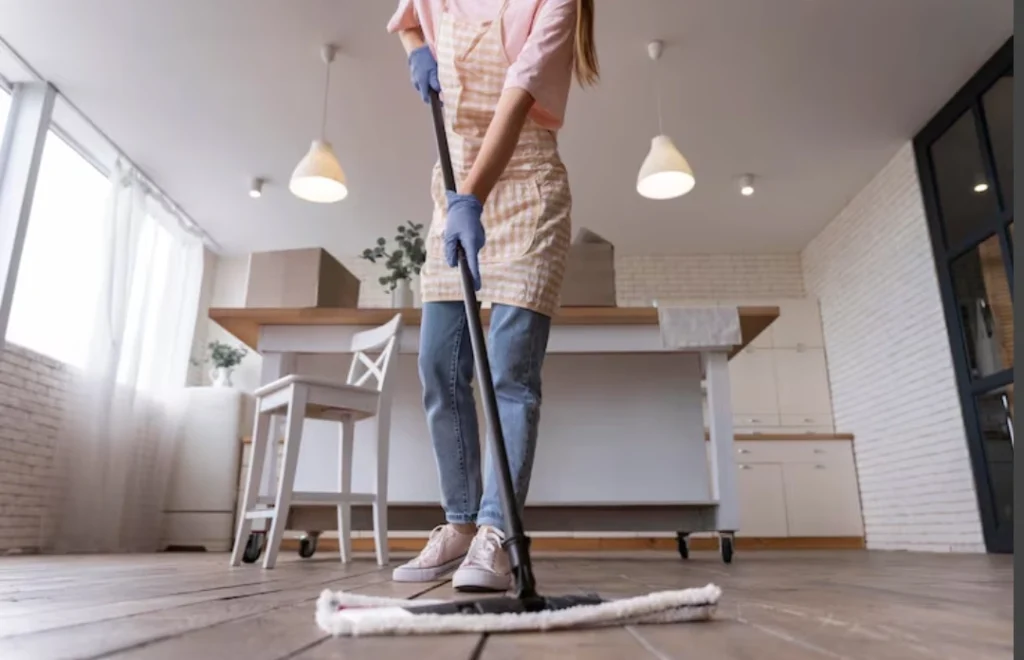
By saying Match Clients With the Right Cleaner, we acknowledge that all homes are unique, in terms of layout, materials, sensitivities (pets, allergies), schedules, and preferences.
A caretaker doing well in a small flat with wooden floors may not perform well in a Victorian terrace with carpets, high ceilings, bathrooms with mould, and a lot of occupants. Moreover, it is important that it fits: a quiet, methodical, and communicative person could be more suited in the less hectic home; a more talkative and energetic person could work well in a more active household.
One of my friends used to work in a service of sending cleaners randomly. They paired an outspoken house cleaner with a customer who desired quietness and low-level communication.
The cleaning was good, but the client continued to demand replacements. Trust was undermined by that incompatibility of style. Once we had perfected our matching process, we avoided that by learning personality preferences pre-emptively.
Good matching also leads to a decrease in friction: the number of do-not-enter areas decreases, more confusion about assignments, and more difficulty in predicting satisfaction. You will not have to keep on turning the cleaner to fit the requirements you have – the match already comes on. That is the real meaning of Match Clients With the Right Cleaner: not all professionals, but your professional.
Our Matching Framework & Criteria
To match clients with the right cleaner, we use a multi-layered framework:
- Home profile and condition: size, room structure, surface material (tile, carpet, wood) types, stairs, pet areas, and damp spots.
- Client priorities/ preferences: what you most care about (e.g., mould, carpets, windows, allergens), what kind of pets you like (cat, dog, shedding), how much you like a person in your own rooms, and your communication style.
- Cleaner skills & specialties: we have a portfolio of cleaners with such specialised strengths: carpet removal, steam work, tile and grout, greener practices, and fragile surfaces.
- Location & logistics: distance, time, time frames. Our favorite cleaners are those who are in close proximity, thus minimizing time wastage and transport expenses.
- Personality factors/trust factors: reliability, background test, client review, consistency. There are clients who would like more discreet and quiet cleaners, and there will be those who would like someone hospitable and talkative.
- Trial & feedback: at the end of a trial clean we receive detailed feedback and modify future matchings when necessary.
We are the middleman: you tell us what you want and what hurts, we have a list of thoroughly checked cleaners, and we fine-tune an option to create a minimum of friction and a high level of comfort.
Due to this reason, by stating that we match clients with the correct cleaner, we imply that we invest our time, data, and human judgment to find a person that you will be pleased to find on your doorstep.
Step-by-Step Guide: How We Match Clients With the Right Cleaner

Here is the exact process we follow to match clients with the right cleaner:
1. Client intake & questionnaire.
Once you request us to come to your house, we will inquire about an organized set of questions: area and layout of your house, types of surfaces, pets, allergies, priority rooms, desired clean frequency, level of communication that you enjoy, and personality (quiet, talkative, etc.).
2. Cleaner profiling
There is a profile of each cleaner in our network: their competencies, experience, their strengths (e.g. upholstery, deep cleaning, eco-methods), personality remarks, testimonials of their past clients, location, and availability.
3. Preliminary shortlisting and filtering.
Depending on your response, we do screening on cleaners whose abilities or logistics are not up to the mark. Based on the resultant pool, a shortlist is selected that is very well matched.
4. Consultation & choice
We present to you 12 potential matches, providing some background information about them (experience, strengths, references). You can decide who you are most comfortable with.
5. Trial clean & observation
The initial one will be a pilot test. We pay close attention to timeliness, adherence to the tasks, approach, consideration of your home, and your level of comfort.
6. Feedback & adjustment
Once the trial is over, we are asking you to tell us about your experience, what you liked, and what you would change. In case the match is not perfect, we make some changes. In other cases, we will reassign you to another cleaner who would be in a better position to address your feedback.
7. Ongoing review & consistency
At regular intervals we make visits: is the quality maintained? New needs (pets, renovations, increased traffic)? When the tide changes, we play again or do the same training.
8. Long-term stability
After a match has been operating successfully we strive to maintain the same cleaner as time passes. Continuity assists them to adjust to your house, identify problems in time, and earn trust.
Using those steps ensures that when we say we match clients with the right cleaner, it’s not a slogan — it’s a considered process that evolves over time.
Conclusion
When you make the decision to work with a cleaning service, asking “how do you match clients with the right cleaner?” is a smart question. That match determines your comfort, trust, satisfaction, and in practical terms, how well the work meets your expectations every time. It’s not just about cleaning power — it’s about people, preferences, and connection.
With our strategy, which involves making time to find out what you need, profiling the skills and personalities of cleaners, filtering, providing a trial, listening to the feedback, and continuity, we transform what would have become an awkward match into a long-term and trustworthy relationship. When it is good, you nearly forget the fact that you are hiring the cleaner, and he/she is simply a person who helps you to keep your place of worship in order.
I have attended games that work perfectly: a mild and quiet cleaner with a customer who has recovered after a disease, who needed calmness and something foreseeable. And bad fits: our failure to recognize personality fit and the need to reassign an individual. The experiences that I had showed me that technique is not sufficient; rapport, respect, and alignment are important.
When finding a cleaning company, you cannot afford to just go with them if they have availability, or if I hear that they are good. Ask them how they match clients with the right cleaner. Inquire about their profiling, trial process, and their adaptation when things do not fit quite right. By investing in matching, a company indicates that they are interested in you, and not only in their schedule.
Eventually, a good cleaner is part of your pattern: someone you can like, whose presence seems natural, whose work seems secure, and whose coming is anticipated. Therein lies the core of good service. And that’s what we do when we decide to match clients with the right cleaner for their needs.


0 Comments