

I’ll be honest — keeping a home truly clean is more than a quick spray and wipe. When you look at The Science of a Clean Home, you realise why professional results last longer. Professionals bring specialised tools, validated techniques, and a trained eye to remove soils, allergens, and hidden grime rather than simply moving them around.
In this article, I explain the science behind maintaining lasting cleanliness, share a personal example, and provide a practical, step-by-step routine to keep your home fresh between professional visits. Whether you’re preparing for guests or safeguarding someone’s health, small science-backed changes matter.
The Science of a Clean Home
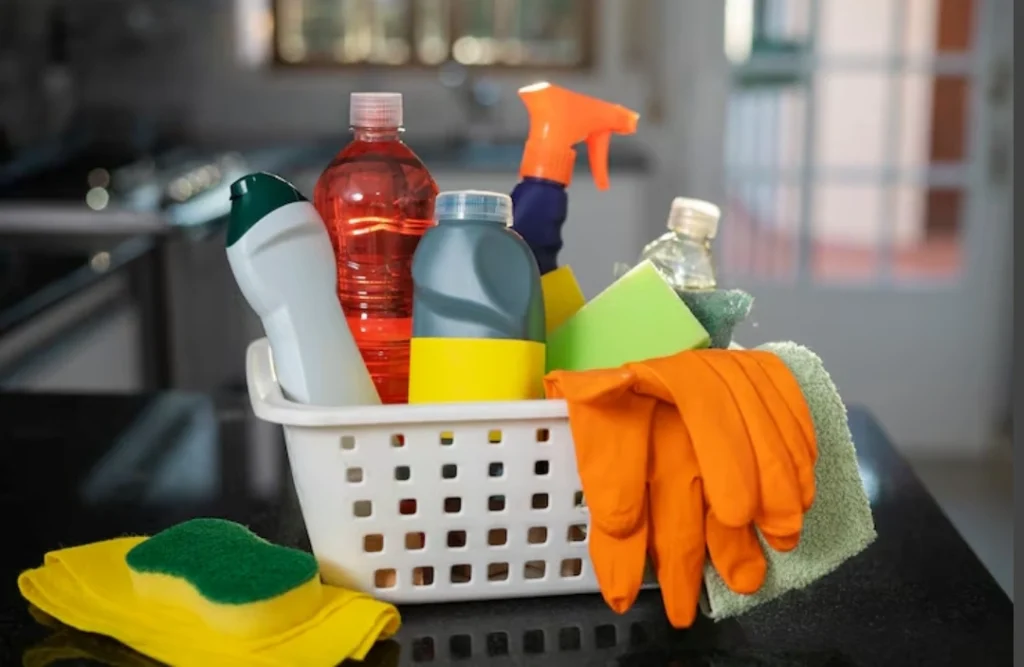
The Science of a Clean Home helps people to understand why technique is significant over time. Professionals clean when they are at the root: soils, grease, and microscopic particles in fibres and cracks. Mere wiping has a tendency to redistribute dirt; professional techniques eliminate and take away dirt which postpones the re-accumulation.
As an illustration, deep dust and house-dust-mite allergens usually left behind by the common vacuuming, are eliminated through intensive HEPA vacuuming and extraction.
According to (PMC), Microfibre tools pick up and leave the particles intact instead of diffusing them, so surfaces remain cleaner than with previous visits. Microfibre has been demonstrated to be better than traditional cloth in use by several studies and industry tests, according to the AJIC Journal.
Another scientific benefit is heat and steam. Many microorganisms on hard surfaces can be inactivated by high-temperature steam without the use of harsh chemi,cals it and provides a chemical-free enhancement where it is needed. (PMC) Over and above gadgets, professionals treat tenacious residues and biofilms with appropriate detergent disinfectant combinations and mechanical force; the removal of that substrate inhibits rapid re-colonisation by microbes. (PubMed)
In addition to the killing of germs, deep cleaning conserves materials. Carpets and upholstery are like filters; take away the set-in grit and greasy deposits, and the fibres are more likely to flex and wear less, thus prolonging the life of a carpet.
Once I booked a pre-holiday deep clean of my flat and could immediately notice the difference: the air seemed to be much lighter, the dust on the sofa settled much more slowly, and weeks later I had to do much more surface cleaning. It is that actual payoff of the world that science predicts: eliminate the source and the benefits endure. They are also chemists: proper dilution and contact time are important – disinfectants do not work on top of dirt. To prevent errors, professionals work with checklists and apply drying and surface-protection measures which prevent fast re-soiling.
These tiny things are multiplied into long-term, quantifiable outcomes. They also recommend ventilation and minor behavioural alterations that minimise re-contamination between services, as well as maintenance plans.
Step-by-step guide: How to make professional results last

- Every day (5-10 minutes): store a microfibre cloth and spray near the sink. Clean high-contact surfaces – switches, handles, remote controls and brush off visible crumbs. Please use a doormat and take off your shoes to prevent grit from coming inside.
- Every week (30-60 min): use a HEPA-filter vacuum over carpets and floors, wash bedding, wash the kitchen surface after cooking, and provide a special clean (tiles, grout, sink) to the bathroom. Vacuum and rotate the upholstered cushions.
- Monthly: empty and replace vacuum bags/filters where needed, wash or replace mop heads, descale showerheads where limescale forms, and treat problem grout or accumulation with steam or an enzyme cleaner.
- Quarterly: arrange a professional deep cleaning session – request carpet removal, oven de-greasing, and steam on non-carpeted hard floors. Request the company to provide an answer on what equipment and items they will be working with; trained teams can rely on the checklists and consider a deep clean prevention and not a showcase.
- Surface-care and product advice: do not use abrasive scouring on sealed surfaces, do as the manufacturer advises on wood and stone, and do not over-wet porous materials. Apply pH-compatible disinfectants and allow disinfectants to reach their contact time.
- Hire a pro and employ them: seek references, enquire on training and insurance, and get them to use microfibre, HEPA vacuums, or steam where necessary. Sign a checklist and schedule a trial visit to notice the difference.
- Monitor outcomes: record dust levels, odor, and stains to determine when to increase professional frequency levels – normally an average increase of three to six months of results suffices in most UK houses with modifications based on pets and allergens. Wash microfibre without fabric softener; the fabric softener destroys the fibres. Keep chemicals in the store and have a basic kit. Record professional visits and spot treatments to be able to monitor what is working and the details.
Conclusion
Learning The Science of a Clean Home empowers you to take control of your living space and enables you to make reasonable decisions when cleaning yourself and when hiring a professional. You spend on training and technique as much as you spend on time–and that training will bring results that are fruitful over a longer period.
Professionals are able to take away substrates that cause rapid re-soiling, use tools that trap and take, not smear, and use products with the right amount of contact time so disinfectants really do work. To families in the UK with pets, children, or allergies, that distinction is important: they can breathe in an improved air quality, have fewer attacks, and avoid deep-cleaning their homes at the change of seasons.
My personal experience has been simple: the room I maintain needs cleaning every few days, but when it is cleaned by a professional, I can go weeks with the light round of maintaining the room. Think value, not price: a well-performed deep clean will save on replacement costs on carpets and surfaces, and save on allergy-related costs. Enquire about environmental certifications and the use of microfibre and HEPA vacuum or steam to minimize the use of chemicals by teams.
Take a brief checklist with photos following every professional visit, to be able to evaluate the effectiveness in the long term, and do not be afraid to provide feedback, as the company that you have a place in and you can arrange its work to your liking. It is important to remember that a clean house is science and habit: the combination of you and your cleaner is the most successful. Combine daily habits with consistent professional intervention, and you will understand why professional outcomes are more long-term.


0 Comments