

You’ve probably debated whether to roll up your sleeves or call in help: what’s the real difference between Professional Cleaning vs DIY Cleaning? They both intend to put your home glittering at first sight, but beyond that is a realm of apparatus, skill, and invisible work.
I will take you through a step-by-step breakdown of what each approach traditionally entails (or avoids) in this article, and demonstrate through personal examples when adding the extra expenditure of professionals is worthwhile. At the end, you will know exactly what you are paying and what time it is worth DIY-ing or buying pros.
Professional Cleaning vs DIY Cleaning. When comparing Professional Cleaning to DIY Cleaning, the key differences are the extent of cleaning, equipment, training, and performance consistency. This is what each of them typically holds, what is often omitted, and why professionals provide more profound results, as I elaborate below.
What DIY Cleaning Typically Includes (and Doesn’t)

At home, DIY cleaning will include the basics, such as dusting, vacuuming, and sweeping floors, wiping down counters, doing laundry, scrubbing sinks, and cleaning toilets. Mopping, wiping mirrors, and spot-cleaning spills are also addressed by many of them. These are the tasks that you can see and access.
What DIY usually lacks (or does badly): getting behind the furniture, doing the inside of hoods in the oven, more professional grout lines, removing embedded dust in carpets, proper sanitisation of high contact areas, mould behind the pipes, or upholstery and curtain treatment.
Most DIYers do not have industrial equipment (such as a hot water extraction machine, steam cleaner, HEPA vacuum) and hence some dirt is still present. Also, DIYers do not necessarily follow the proper contact time of disinfectants, or they may be unaware of which cleaner is suitable for a particular surface of the object, resulting in its destruction or ineffective cleanliness.
What Professional Cleaning Includes

When you hire pros, you get a much more extensive package. Professional cleaning typically includes:
- You have a far wider package when you pay professionals. Professional cleaning normally entails:
- Hot water cleaning and deep extraction of carpets, rugs, and upholstery.
- High-temperature treatments or steam treatments of sealed hard floors or tiles.
- Good quality vacuum cleaners (HEPA filter attached often) to trap fines and allergens.
- Removal of biofilm and residues in the kitchen, bathrooms, and the back of machines.
- Special treatments (e.g. mould, limescale, descaling)
- Full room checklists that are based on skirting boards, ceiling corners, behind radiators, and inside vents.
- High-contact area protocol dosing (light switch, doorknob, handle) sanitisation.
- Cleaning of windows, cleaning of blinds or curtains, and glasswork.
- Deep clean Oven, fridge freezer, or appliance (when included in the contract)
- Chemicals, cloths, and tools are supplied so that you need not bring your own.
- Cross-contamination is prevented by having trained personnel work in an orderly sequence.
- Drying, covering, finishing, and less-quickly soiled.
Professionals tend to ensure consistency: the same degree of attention on every visit and responsibility. Their inclusion of investment in training, health and safety compliance, insurance, and equipment maintenance takes them towards more comprehensive coverage.
Why Professional Cleaning vs DIY Cleaning Feels and Lasts Differently
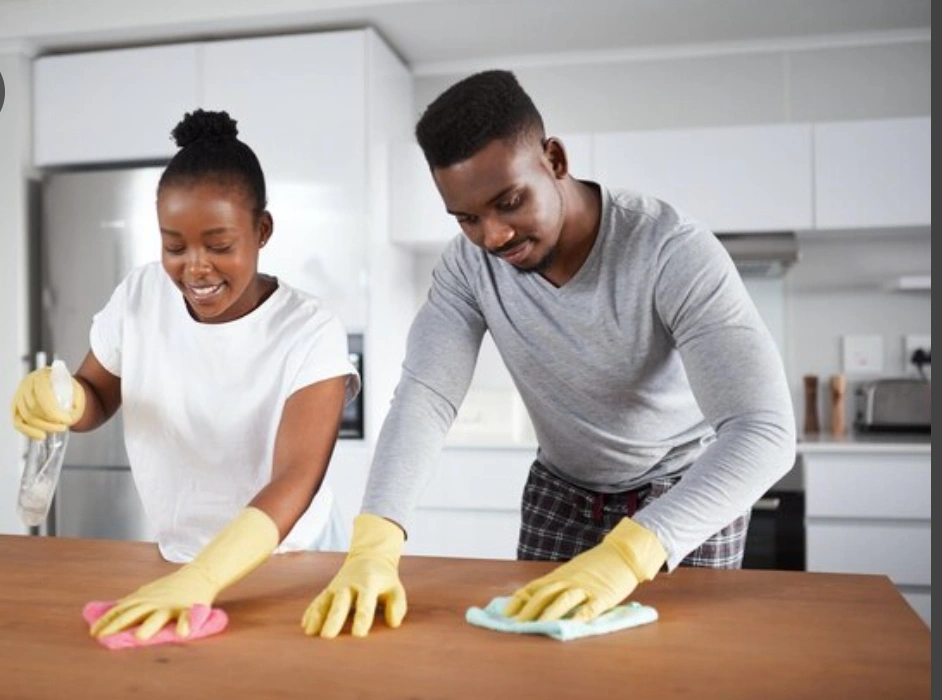
Since the professionals come with more powerful machines, certified products, and techniques practiced more than once in different homes, they access areas that you usually overlook. I recall the time when I once DIY-cleaned my flat before a move, when I scrubbed all the visible areas, but when the professional cleaner started, she discovered and cleaned thick dust under radiators, at the bottom of wardrobes, and in the vents. The result? My house was somehow re-cleaned in a way that my cleaning could never achieve.
In addition, professionals overlay their approach: they cleanse the soils first, then sanitize, and finally apply protections. Most DIY routines follow the opposite of these steps (spray and then wipe), which can seal dirt instead of taking it off. Pros also perform tasks in logical order: i.e., dusting first, then vacuuming, followed by mopping.
They avoid recontamination. So in Professional Cleaning vs DIY Cleaning, you often pay for longevity and consistency, not just the single clean.
Step-by-Step Guide: What to Compare Between Professional and DIY
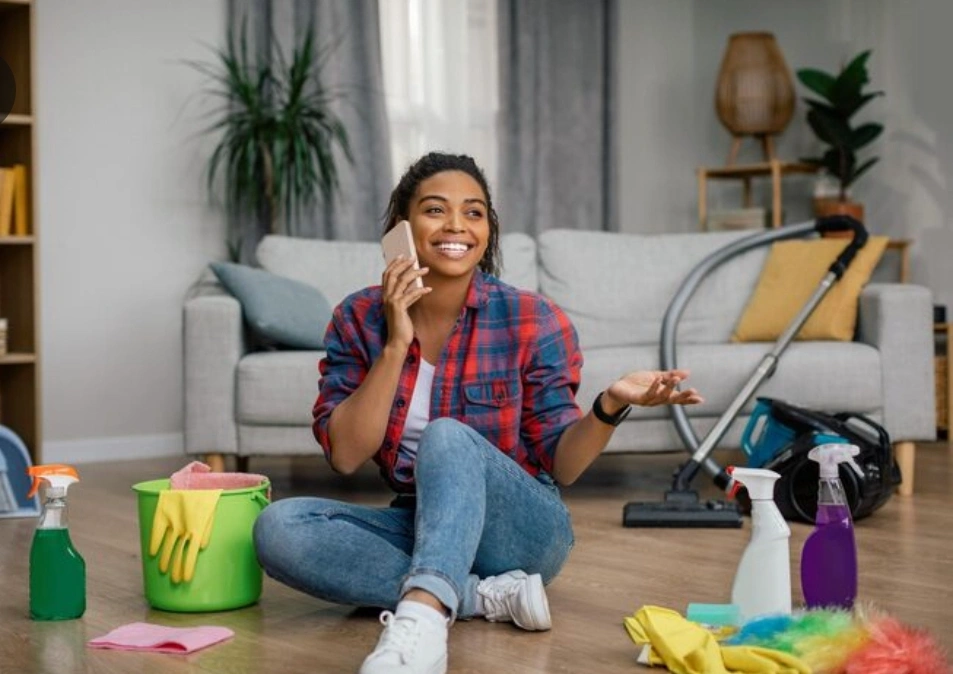
List your needs & pain points
List the places that are the most difficult for you (bathroom grout, oven, carpets, mould) and the ones that you are comfortable with keeping.
Test your available tools and skills.
Do you have a good vacuum, steam cleaner, microfiber cloth and are you aware of good cleaning agents? Otherwise, those upgrades go hand in hand with certain professional expenses.
Request sample checklists
Ask any cleaner to visit you with his/her entire list of tasks. Compare that with what you do. That reveals what you miss.
Estimate time vs cost
Calculate the number of hours DIY would occupy, times that by your hourly value (what you could do with that time), and compare professional quotes.
Trial difference Before/After inspection
Book an occasional professional clean and monitor those areas that you have problems with. Record whether or not you can sustain the standard.
Choose between hybrid and full outsource
You can do surface cleaning in the form of weekly tidying and delegate more serious work (carpets, blinds, oven) to specialists. This will be cost-saving, yet you will enjoy deep cleaning.
Set a review timeline (3 months)
After months, see whether professional cleaning is keeping up the standards, coughing up your load, or if you are not satisfied, and you should renegotiate.
With that guide, you are in a position to view what is really contained in each approach and make a decision grounded in value rather than perception.
Conclusion
Comparing Professional Cleaning vs DIY Cleaning, it depends on what it includes (and what it leaves out). DIY is excellent in cases of regular maintenance: wiping, vacuuming, spot cleaning, cleaning up – the tasks you have to handle every week. It is not fixed, cheap, and allows control over products and time. However, it tends to pass over concealed, in-depth work and does not have specific tools or regularity.
The professionals arrive with heavy-duty equipment, steam and extraction, certified chemicals, trained personnel, checklists, and a complete range of rooms, edges, vents, appliances, and high-risk areas. That is what you are paying when you hire someone professional. Their design work can take a significant amount of time, and their style of work can reorganize your space better than DIY can.
It is not about it being wholesale, it is about balance. Most shrewd housewives have a mix of both techniques: you do the light cleaning on your own, but have a professional deep cleaning with a regular schedule. The above step-by-step guide will help you compare your needs, time, tools, and budget. Conduct a trial professional visit and determine whether there is sufficient improvement to continue service.
In my personal experience, having had the first professional clean after the time mentioned, I understood that there were a lot of dusty corners I had never tidied up. It was quite easy to maintain such a fresh base than to restore it once it was ruined. When you discover that your usual DIY habits are not providing the quality of image and permanent freshness that you desire, then it is worthwhile to leave the heavy lifting to the professionals. Not only makes you feel better, but a clean home also gives you energy for what is really important.


0 Comments